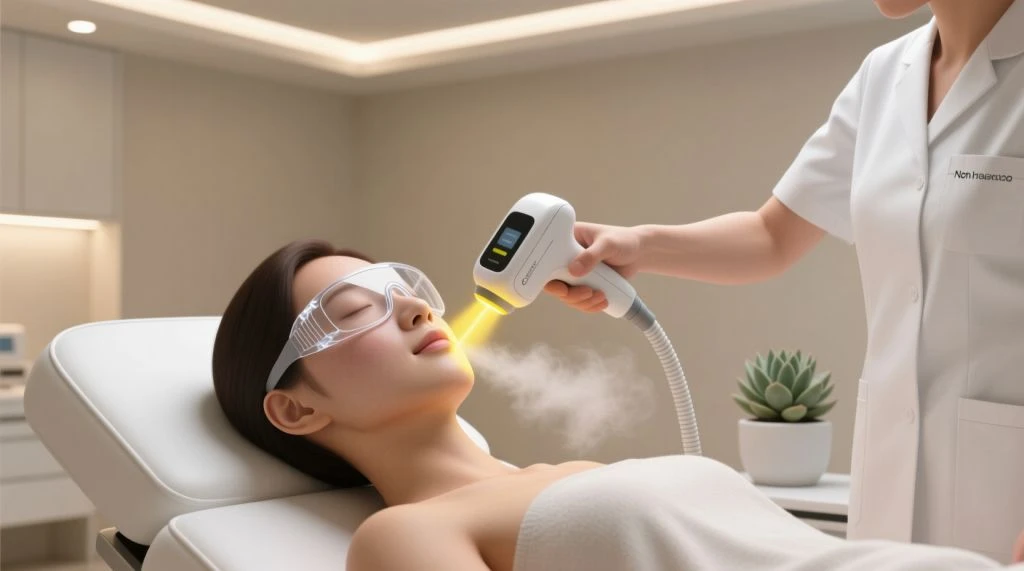
In Singapore, where the climate can be harsh on the skin, finding a gentle yet effective treatment for sensitive skin is crucial. Traditional laser treatments often come with the risk of causing inflammation, which can be counterproductive for those with reactive skin. The dual yellow laser system offers a new approach, targeting redness and superficial pigment with precision while minimizing thermal stress. This makes it an ideal choice for patients with easily irritated skin.
The Dual-Wavelength Advantage
The dual yellow laser system operates on a paired-wavelength principle. One wavelength targets hemoglobin, effectively treating small blood vessels. The other wavelength focuses on superficial pigment. By combining these two wavelengths, the system addresses the two primary visible causes of skin reactivity: vascular redness and uneven pigment. This dual approach not only reduces the need for repetitive passes but also limits overall energy exposure to the skin, making it particularly suitable for sensitive patients.
The Yellow Wavelength: A Kinder Touch
The yellow wavelength is particularly effective because it sits near a peak where oxyhemoglobin absorbs light efficiently. This allows for lower fluence and fewer pulses to achieve the desired effect, resulting in less collateral heating of surrounding tissue. In practical terms, this means milder immediate redness, shorter downtime, and a reduced chance of inflammatory rebound. For patients with easily irritated skin, these differences can make the treatment experience far more tolerable.
Addressing Pigment with Precision
The shorter wavelength, which falls in the green to blue-green range, is designed to handle epidermal and superficial dermal pigment. While it is not intended for deep pigment removal, it effectively smooths superficial mottling. This is particularly important because irritated skin often appears worse when tiny pigment irregularities are combined with vascular redness. By treating both issues simultaneously, the dual yellow laser achieves a more uniform result with fewer sessions.
Ideal Treatments for Dual Yellow Lasers
In clinical practice, dual yellow lasers excel in treating conditions such as persistent facial redness, telangiectasia (small broken capillaries), rosacea-related erythema and flushing, and superficial pigment issues like sunspots and post-inflammatory hyperpigmentation. They also offer gentle improvements in skin tone and radiance without the need for aggressive resurfacing. While they are not a cure-all for deep or complex pigment disorders, they are often the safest first-line option for reactive skin.
Patient Experience: A Calmer Recovery
One of the key benefits of dual yellow lasers is the predictability of the recovery process. Many patients report only mild warmth and redness that typically subsides within hours or a few days. This allows them to return to social activities quickly. Clinicians can further enhance this experience by pairing laser sessions with calming topical regimens, such as barrier-supportive creams and strict sun protection. These adjuncts help reduce the risk of post-procedure inflammation and ensure that the gains from treatment are preserved.
Practical Technique: Less is More
When treating reactive skin, a conservative approach is essential. Clinicians typically start with low fluence and conservative pulse counts, using skin cooling techniques before, during, and after pulses to limit thermal buildup. They may also treat small areas initially as test spots for highly reactive skin and space sessions widely enough to allow for full recovery. This patient-first approach minimizes adverse events and builds trust, making dual yellow lasers a tool for steady improvement rather than a one-shot gamble.
Combining Modalities Wisely
Dual yellow lasers can be effectively combined with other gentle strategies. For instance, they can be used alongside low-strength topical brighteners to control pigment or paired with mild resurfacing steps later in the treatment course. For rosacea, combining laser treatments with medical management, such as topical anti-inflammatories or systemic therapy when indicated, can provide better long-term control. The key is to address the most reactive component first and then refine the treatment.
Caution for Certain Patients
While dual yellow laser Singapore are safer than many aggressive lasers, caution is still necessary. Patients with darker skin tones are at higher risk for pigmentary issues, so conservative settings and test spots are essential. Active infections, recent isotretinoin use, or medications that increase photosensitivity may require treatment delays or modifications. A thorough consultation before the first session can help identify these factors and ensure safe treatment.
Managing Expectations and Measuring Outcomes
Patients often seek clear timelines and realistic expectations. While some improvement may be visible after the first session, significant results typically require multiple treatments spaced several weeks apart. It is important to be candid about the limits of the treatment, such as deep-seated pigment or very dense telangiectasia, which may need complementary approaches. Framing outcomes as “calmer, less reactive, and visibly improved tone” helps manage expectations.
Safety and Complication Management
While no device is without risk, dual yellow lasers generally have mild complications when used conservatively. Transient redness, temporary pigment changes, and rare burns or scarring can occur if energy levels are too high. Clinicians should have protocols in place for managing post-inflammatory hyperpigmentation and cooling strategies, and they should advise patients on sun avoidance and gentle skincare. Good follow-up and prompt management of any unexpected changes are crucial for maintaining simplicity and safety.
Clinic Workflow Tips
For clinics adopting dual yellow lasers, practical steps can help ensure safe integration. These include training staff on conservative settings for different skin phototypes, providing clear pre- and post-care instructions that emphasize sun protection and barrier repair, offering test spots for reactive or darker-toned patients, and documenting photos before each session to track subtle changes. These habits reduce risk and make results reproducible.
Conclusion: The Balance of Effectiveness and Gentleness
The dual yellow laser is often referred to as the “best” laser for easily irritated skin because it strikes a balance between targeted effectiveness and a gentler thermal footprint. It does not replace clinical judgment or the need for careful patient selection, but it does offer expanded options for those who previously had to avoid lasers. This practical, patient-centered approach is what truly sets dual yellow lasers apart.

Comments
No comments yet. Be the first to react!