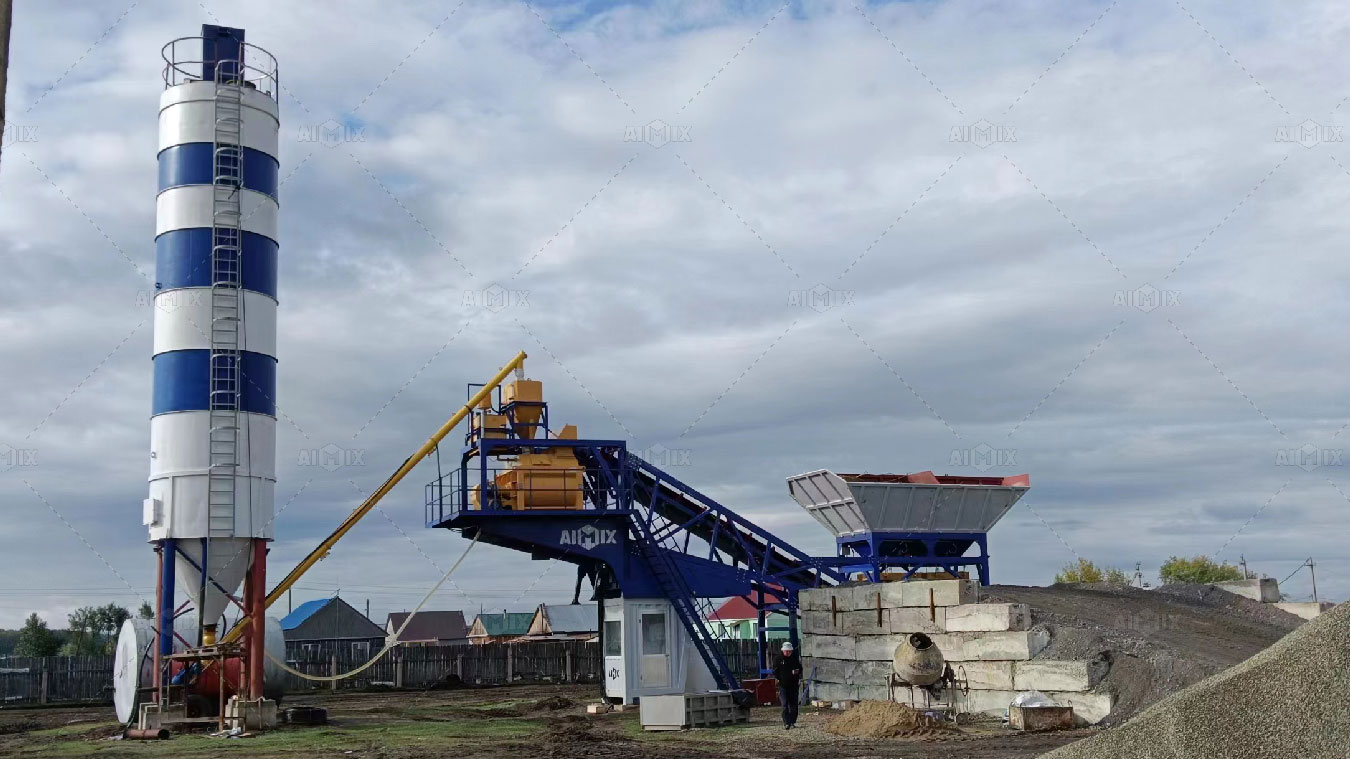
Successfully executing a construction project in mountainous terrain is a complex equation where logistics, environment, and efficiency intersect. One of the most critical variables in this equation is the on-site production of concrete. Simply deciding to use a mobile concrete plant is just the first step. The real engineering challenge—and the key to profitability and project flow—lies in its precise capacity configuration. Choosing incorrectly can lead to crippling bottlenecks or wasteful overspending. Therefore, understanding how to “speak the language” of project parameters to select the right plant setup is paramount for project managers and engineers working in these demanding landscapes.
Decoding Mountainous Terrain: More Than Just Elevation
Mountainous projects present a unique cluster of constraints that directly dictate concrete plant requirements. It’s not merely about high altitude; it’s about the compounded effects of limited space, winding and poor-quality access roads, volatile weather, and often, a heightened environmental sensitivity. A stationary plant is typically impractical, making a mobile concrete plant the default choice. However, the generic mobile concrete plant price(planta de concreto móvil precio) you see in a brochure becomes irrelevant until it’s evaluated against your specific site’s “parameter profile.” The initial capital expenditure must be justified by operational efficiency gains and risk mitigation unique to the mountains.
The Critical Parameters for Configuration
Configuring your mobile batching setup requires a forensic analysis of several key project parameters:
- Project Scale & Daily Pour Volume: This is the most fundamental driver. A massive dam foundation requires a completely different output than a series of small retaining walls or bridge piers along a highway. Mismatching here is costly. Over-specifying leads to a higher-than-necessary mobile concrete plant price and underutilization. Under-specifying creates constant delays, potentially stalling the entire project and incurring far greater costs than the plant itself.
- Site Topography & Footprint: Mountain sites are notoriously cramped. The available flat area for setting up the plant, aggregate stockpiles, and cement silos is severely limited. This physical constraint often makes a small concrete plant configuration not just a matter of output preference, but of physical necessity. The plant’s modular design and overall footprint are as important as its mixer size.
- Material Supply Chain & Access Road Constraints: How will aggregates and cement be delivered? What is the frequency and capacity of delivery trucks that the access roads can safely handle? If roads are narrow and deliveries are small but frequent, a plant configured for smaller, more frequent batching cycles is more efficient than one designed for huge, infrequent batches that strain logistics.
- Weather Windows & Pouring Schedules: Mountain weather is unpredictable. Pouring schedules may be compressed into short, favorable periods. The configured plant must have the peak capacity to capitalize on these windows, producing a high volume of quality concrete rapidly when conditions allow.
The Capacity Configuration Matrix: From Theory to Practice
Translating these parameters into a technical specification requires moving from general needs to specific plant features. The goal is to find the optimal point where capability meets economy, balancing the concrete plant price(planta de concreto precio) with long-term project value.
Analyzing Output vs. Demand: Avoiding the “Bigger is Better” Trap
A common mistake is equating a higher price tag with better suitability. A larger, more expensive mobile concrete plant might boast a 120 m³/hr output, but if your project’s peak daily demand, factoring in realistic batching and pouring times, is only 400 m³, a smaller, more agile 60 m³/hr plant could meet the demand over a slightly longer workday at a significantly lower mobile concrete plant price. The calculation must be based on average and peak demand, not theoretical maximums. For many linear projects like mountain roads, a small concrete plant with a 30-50 m³/hr capacity, easily leapfrogged along the route, is often the most logical and cost-effective solution.
The Special Case for the Small Concrete Plant
In mountainous regions, the small concrete plant is frequently the unsung hero. Its advantages are pronounced:
- Mobility & Setup Speed: It can be transported in fewer loads and assembled on precarious, limited platforms where a larger plant cannot fit.
- Lower Operational Cost: It consumes less power, requires smaller material deliveries that match tight road logistics, and often needs a smaller crew to operate.
- Adaptability: It can efficiently serve multiple, dispersed smaller sites (e.g., avalanche shelters, viewpoint platforms, small bridge abutments) from a single base, maximizing its utility.
While the upfront concrete plant price for a small model is attractive, its true value is unlocked in the reduced costs of mobilization, site preparation, and daily logistics.
Cost-Benefit Logic: Beyond the Initial Price Tag
The decision-making process must extend far beyond comparing the initial mobile concrete plant price from different suppliers. A holistic Total Cost of Ownership (TCO) analysis for the project duration is essential.
The Hidden Costs of Mismatched Capacity
Choosing a plant with too little capacity leads to “production bottlenecks.” The costs here are massive: idle labor, idle equipment (cranes, pumps), missed schedule milestones with potential liquidated damages, and extended project overhead. Conversely, a plant with excessive capacity ties up excessive capital (a higher mobile concrete plant price), incurs higher fuel and maintenance costs, and may require expensive site modifications to accommodate it, negating any perceived benefit.
Optimizing for the Mountain Environment
The right configuration also minimizes environmental impact—a crucial factor in ecologically sensitive mountains. A properly sized small concrete plant(planta de concreto pequeña) has a smaller physical footprint, reduces the number of heavy truck trips on fragile access roads, and, with efficient dust and water management systems, better protects the local ecosystem. This isn’t just good ethics; it’s good risk management, helping avoid regulatory delays and community opposition.
Making the Strategic Decision
Ultimately, configuring a mobile concrete plant for a mountainous project is a strategic optimization exercise. It begins with a dispassionate analysis of your project’s specific parameters: volume, space, logistics, and schedule. This analysis will point you toward a necessary capacity range. Within that range, you then evaluate options, where the concrete plant price becomes one of several key financial factors, alongside operational efficiency, mobility, and reliability.
A Final Parameter: Supplier Expertise
The final, often-overlooked parameter is the supplier’s expertise. A partner who understands mountainous projects can provide invaluable guidance, ensuring the plant is not just a piece of equipment, but a integrated system tailored to your site’s language of constraints. They can help you interpret your parameters into a configuration that speaks the language of efficiency, cost-control, and success in the world’s most challenging terrains. Investing time in this precise configuration process ensures your mobile concrete plant becomes a powerful voice for project fluency, not a source of costly miscommunication.

Comments
No comments yet. Be the first to react!