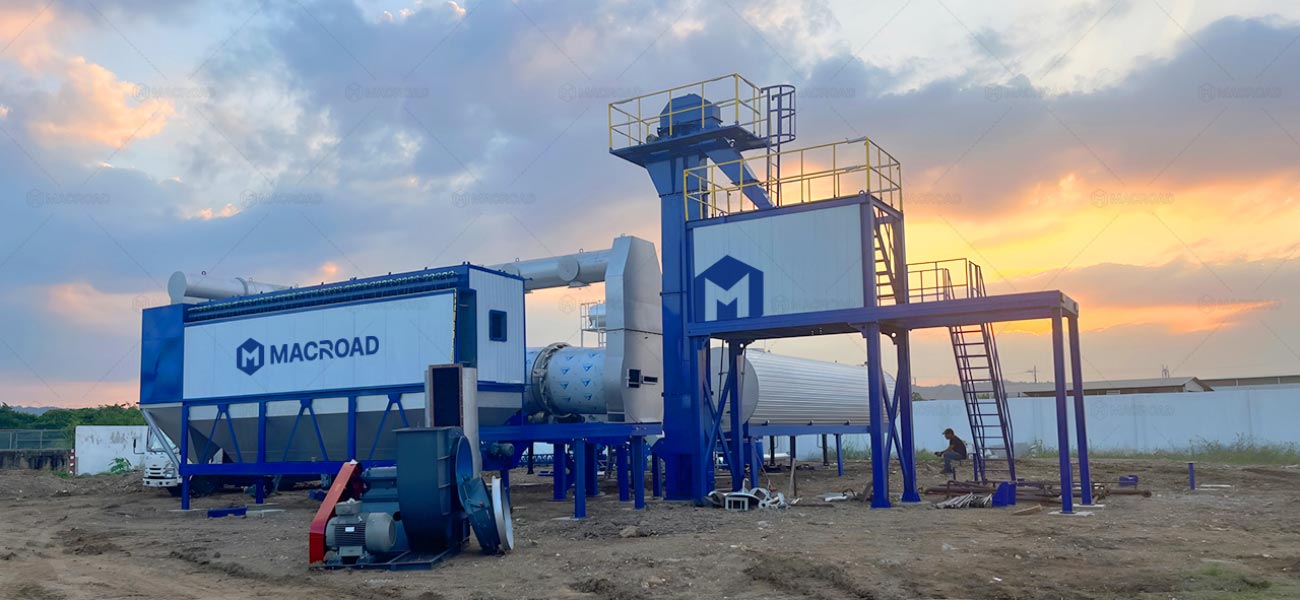
Latin America's infrastructure landscape is undergoing a significant transformation. From the massive BR-163 agricultural corridor in Brazil to the iconic Pan-American Highway in Guatemala, governments and private concessionaires are investing billions in modernizing road networks to stimulate economic growth and improve connectivity. For contractors operating in this dynamic environment, the ability to deliver high-quality projects on time and within budget is paramount. However, they often face unique regional challenges: extreme topography like the Andes Mountains, humid climates that affect material quality, and the logistical nightmare of transporting equipment over vast, sometimes undeveloped, distances.
At the heart of overcoming these hurdles lies a critical piece of technology: the asphalt plant(planta de asfalto). The choice of mixing equipment is no longer just a procurement decision; it is a strategic one that dictates a contractor's flexibility, production capacity, and ultimate profitability. By investing in modern solutions—ranging from high-output stationary units to highly flexible mobile asphalt plant options—Latin American firms are not just paving roads; they are paving the way for superior project delivery.
The Strategic Role of Modern Asphalt Plants in Project Success
The correlation between plant technology and project delivery speed is direct. When a contractor secures a bid for road rehabilitation or new construction, the clock starts ticking. Liquidated damages for delays can erode profit margins, making production reliability essential. Today's advanced mixing plants are engineered to mitigate these risks by ensuring a continuous, high-quality supply of mix, regardless of external pressures.
For example, during the expansion of Route 4 in Bolivia—a project critical for connecting Cochabamba to Santa Cruz—contractors faced the dual challenges of the COVID-19 pandemic and the complex geology of the Andes. A containerised asphalt plant was installed remotely, with engineers providing 24/7 video support. Within just 30 days of arrival on site, the plant was producing the precise, high-grade asphalt needed to withstand heavy rainfall and landslides, proving that the right equipment ensures project continuity even when the world shuts down.
Mobile Asphalt Plants: Bringing Flexibility to Challenging Terrains
One of the most significant trends improving project delivery in Latin America is the shift toward mobility. Unlike the stationary giants of the past that required months of foundation work, today's mobile units are redefining what it means to be agile.
Rapid Deployment and Reduced Site Work
A mobile asphalt plant(planta de asfalto móvil) is designed to move. For contractors working on scattered projects across countries like Mexico or Panama, this is a game-changer. The Lintec CDP series, for instance, can be transported on standard trailers and assembled on compacted soil without the need for concrete foundations. This capability drastically reduces site preparation time and costs. In Guatemala, a contractor deployed a mobile asphalt plant to Cobán—a city 200km from the dealer's headquarters—to immediately begin road rehabilitation work in a humid, high-altitude environment. The ability to mobilize quickly meant the contractor could start production almost immediately upon arrival, accelerating the timeline for improving urban traffic flow.
Maintaining Quality Across Distributed Projects
Mobility does not equate to a compromise on quality. Modern mobile units are equipped with the same advanced control systems as their stationary counterparts. In Panama, Ingenieria PC S.A. utilized a mobile unit not only for its own projects but also to supply hot mix asphalt to third parties. The plant's twin-shaft mixer and advanced software ensured a homogeneous mixture, enabling the contractor to produce superior road surfaces while benefitting from the machine's ability to be remobilized quickly for the next job site. This versatility allows contractors to pursue a wider variety of projects, knowing their equipment can keep up with the workload.
Maximizing Efficiency with Mini Asphalt Plants for Niche Applications
While large-scale highways dominate the headlines, a significant portion of infrastructure work in Latin America involves smaller jobs: repairing rural access roads, capping trenches in urban areas, or developing municipal pathways. For these applications, the mini asphalt plant(mini planta de asfalto) segment is gaining traction, offering a perfect blend of compact size and functional output.
Cost-Effectiveness for Small to Medium Contractors
A mini asphalt plant typically offers lower capital expenditure and reduced operational costs, making it an attractive entry point for smaller contractors looking to vertically integrate their supply chain. These compact units can produce consistent asphalt for projects that do not require the massive tonnage of a full-scale plant. Furthermore, their smaller footprint allows them to be set up closer to the job site, significantly reducing trucking time and fuel costs—a major expense in remote areas. Many municipal contractors across Colombia and Peru are now opting for this scale of equipment to handle localized road maintenance programs efficiently.
Precision in Tight Spaces
The evolution of small-format equipment mirrors trends seen in paving, such as the introduction of small pavers for narrow trenches. Similarly, a mini asphalt plant allows for high-quality machine-based production for localized repairs. This ensures that even the smallest construction task benefits from plant-produced mix rather than lower-quality temporary solutions, thereby extending the lifespan of the entire road network. By utilizing a mini asphalt plant for ancillary projects, contractors can reserve their larger, high-capacity plants for core highway work, optimizing their overall fleet utilization.
Enhancing Quality Control and Sustainability
Beyond logistics and mobility, modern asphalt plants are bolstering project delivery through superior technology. Latin American contractors are increasingly held to strict quality metrics, such as the International Roughness Index (IRI), which measures road smoothness.
Precision Dosing and Moisture Management
In regions with high rainfall or humidity, aggregates can retain moisture, throwing off the balance of a mix. Newer plants, like the Ciber iNOVA series, now feature moisture sensors integrated into the feed hoppers. These sensors allow for real-time adjustments to the dosing of virgin minerals and bitumen, correcting deviations instantly. This technological edge means contractors can maintain consistent quality even when material sources vary, reducing the risk of rejected loads and rework. Whether using a stationary unit or a mobile asphalt plant, this level of control directly translates to longer-lasting pavements.
The Rise of RAP and Sustainability Goals
Sustainability is no longer just a buzzword; it is a contractual requirement. The Inter-American Development Bank estimates that significant investment is needed in the region, and much of that funding is tied to environmental stewardship. Asphalt plants are helping contractors meet these goals through the use of Reclaimed Asphalt Pavement (RAP). By integrating up to 15-25% RAP into new mixes, contractors lower material costs, conserve natural resources, and reduce emissions. In Mexico, plants supporting the National Road Infrastructure Program are actively using RAP to align with greener construction practices, proving that profitability and sustainability can go hand in hand.
Future-Proofing Delivery with Digital Integration
Finally, the modern asphalt plant is becoming a digital hub. The ability to monitor production remotely, access fault diagnostics, and manage the construction site through centralized platforms is elevating project management to new heights.
Data-Driven Decision Making
Plant configurators and digital tools allow contractors to simulate different setups before the equipment even hits the soil, ensuring the plant is tailored to specific project needs. During production, digital fault diagnostics monitor components like filter bags and mixers, predicting wear and reducing unexpected downtime. For the Latin American contractor, this means fewer surprises. They can guarantee their laboratory teams that the mix leaving the plant—whether from a high-capacity stationary unit or a compact mini asphalt plant—will meet the strict specifications demanded by government ministries, as seen in the São Paulo highway projects where plants achieved 100% approval in quality control tests.
Meeting the Region's Ambitious Targets
With an estimated $2.22 trillion in infrastructure investments required by 2030, the pressure to deliver is immense. Contractors who leverage the full capabilities of their asphalt plant assets—whether it's a massive containerised unit for a five-year highway project or a nimble mobile asphalt plant for a series of bridge approaches—will be the ones who capture market share. By embracing these technologies, Latin American firms are not just participating in the construction boom; they are leading it with efficiency, quality, and innovation.
The Road Ahead: Strategic Investment as a Competitive Advantage
Ultimately, the evolution of the asphalt mixing plant reflects the evolution of the Latin American contractor. Gone are the days when a single, immovable plant could serve an entire region. Today, project delivery depends on agility. The ability to transport a mobile asphalt plant across the jungles of Guatemala or deploy a mini asphalt plant for a critical urban repair dictates a company's capacity to take on diverse work and complete it profitably.
As technology continues to advance, the integration of precise controls, RAP capabilities, and remote diagnostics will become standard. For contractors looking to improve their project delivery capabilities, the calculation is simple: the right plant leads to the right mix, which leads to the right road. And in the race to build Latin America's future, getting that equation right makes all the difference.

Comments
No comments yet. Be the first to react!