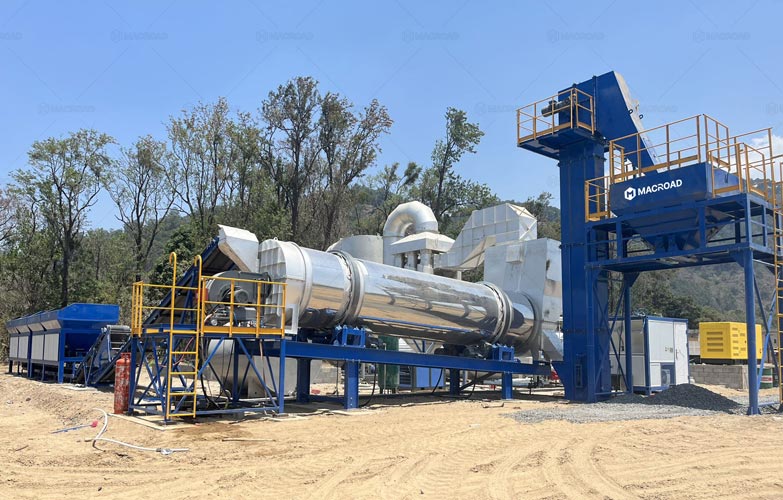
Infrastructure expansion in the remote regions of Latin America plays a decisive role in driving regional economic development and improving social integration. From the dense Amazon basin to isolated valleys deep within the Andes, establishing reliable transportation networks remains a critical priority for governments and private contractors. Road and bridge construction projects in these rural zones face severe logistical hurdles, such as long transport distances from urban industrial supply hubs, unpredictable weather patterns, and rugged geography that restricts access for standard cargo vehicles.
To ensure the technical viability and profitability of these remote operations, selecting the right equipment strategy is paramount. Relying on commercial hot mix suppliers located hours away often results in cold, unworkable mixtures by the time they reach the job site. Setting up a dedicated asphalt plant(planta asfáltica) directly within or near the project perimeter resolves this quality control challenge. Having a localized asphalt plant allows engineering teams to control production schedules, adapt mixes to regional aggregates, and maintain the exact temperature required for high-durability pavement placement.
Operational Demands of Isolated Infrastructure Sites
Developing road infrastructure in remote parts of Latin America demands meticulous operational planning. The primary challenge stems from supply chain vulnerability, where a single delay in material delivery can stall entire construction crews and inflate operational costs.
Overcoming Logistics and Transport Distances
Transporting hot mix asphalt across hundreds of kilometers of unpaved tracks is highly inefficient. The material cools down during long transit windows, leading to premature setting and making proper compaction impossible. Localized production effectively eliminates this transport barrier, ensuring that the fresh pavement material retains its physical integrity from the mixing drum to the roadbed.
Adapting to Regional Environmental Pressures
Remote regions in Latin America often present extreme weather conditions, including tropical humidity in lowlands or freezing temperatures in highland zones. Equipment operating in these environments must feature robust aggregate drying capabilities to handle high moisture content in raw materials while optimizing fuel consumption.
Technical Feasibility of a Drum Mix Asphalt Plant
For isolated job sites where space, power, and quick setup times are primary constraints, choosing the appropriate plant configuration is essential. A drum mix asphalt plant(planta asfáltica continua) represents a highly feasible option for remote projects because of its continuous production process and simplified mechanical architecture.
| Operational Indicator | Stationary Batch Plant | Drum Mix Asphalt Plant |
|---|---|---|
| Production Continuity | Intermittent batch cycles | Continuous flow output |
| Mechanical Complexity | High (mixing tower, screens) | Low (integrated drying/mixing) |
| Relocation Flexibility | Complex and time-consuming | Highly modular and rapid |
| Foundation Requirement | Heavy concrete foundations | Minimal compacted ground prep |
Simplified Mechanical Infrastructure
Unlike complex batch systems that rely on multi-tier mixing towers and vibrating screens, a drum mix asphalt plant combines heating, drying, and mixing inside a single rotating drum. This streamlined design reduces the number of moving parts, which minimizes the risk of mechanical failure in areas where spare parts and specialized maintenance technicians are difficult to source.
Continuity and Fuel Efficiency
Continuous production allows contractors to generate steady hourly volumes without frequent stops and starts. This continuity improves thermal efficiency and lowers overall fuel consumption per ton of mixed material. For remote sites where fuel logistics are complex, maximizing burner efficiency inside the drum represents an essential cost-saving advantage.
Optimizing Road Finishing with Compact Equipment
Efficient production represents only half of the solution; applying the material smoothly on narrow or restricted rural pathways requires a corresponding downstream machinery strategy. Standard heavy paving machines are often too wide for rural community paths or narrow mountain passes.
Accessing Narrow and Intricate Road Alignments
When paving rural access roads, mountain switchbacks, or inner-village corridors, large commercial machinery faces significant maneuverability limitations. Incorporating a mini asphalt paver(mini pavimentadora de asfalto) into the equipment fleet allows contractors to lay consistent, high-quality mats in confined spaces where manual labor would be inefficient and standard pavers cannot fit.
Enhancing Surface Compaction and Mat Quality
Using a mini asphalt paver ensures that the freshly produced mix from the local plant is distributed evenly before the rollers begin compaction. This mechanical precision helps eliminate voids and surface irregularities, creating a smooth, durable barrier against heavy rain and tropical runoff.
Project Viability and Resource Management
Evaluating financial and material feasibility before deployment prevents costly bottlenecks during execution. Managing local raw materials and choosing equipment with flexible configurations are critical factors for a sustainable remote project.
Sourcing and Preparing Local Aggregates
Remote locations require maximal utilization of nearby quarries to avoid high material hauling costs. The mixing equipment must be capable of processing diverse aggregate types, ensuring proper bitumen coating even when local stone features varied porosity or high natural moisture content.
Energy Supply and Modular Setup Options
- Self-Contained Power Units: Utilizing diesel generator sets that match the specific electrical loads of the production units.
- Modular Foundations: Opting for frame-mounted systems that require basic soil stabilization rather than deep concrete footings.
- Liquid Fuel Options: Selecting burners capable of running on heavy oil, diesel, or liquefied gas depending on local fuel availability.
Strategic Adaptations for Future Rural Connectivity
The long-term success of road networks in isolated Latin American sectors hinges on choosing flexible, reliable equipment configurations. As regional connectivity plans expand, the demand for modular, high-efficiency mixing units will grow in parallel with local economic development.
Investing in adaptable technology allows civil engineering firms to handle tough geographical conditions with confidence. By matching continuous production systems with compact, agile finishing machinery, contractors can deliver durable pavement infrastructure that stands up to environmental challenges while maintaining strict control over operational margins.

Comments
No comments yet. Be the first to react!